Sneakers, Stashes, and Signals: The Cold War Playbook Making a Comeback on American Streets

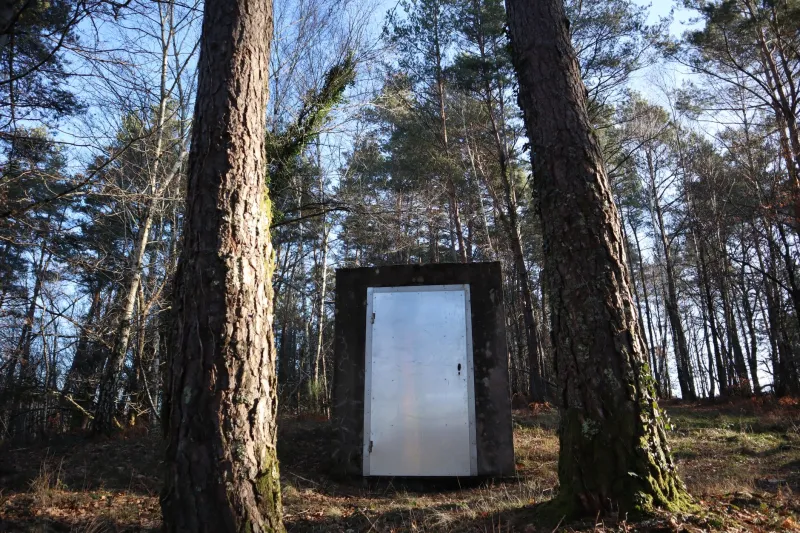
There's a hollow tree in a park somewhere in the Pacific Northwest. Inside it, wrapped in a zip-lock bag and a layer of electrical tape, is something someone left for someone else. No handshake. No receipt. No transaction ID. Just a location, a time window, and a mutual understanding between two people who will probably never meet face-to-face.
Welcome to the dead drop economy — and it's more active than you'd think.
The Analog Comeback Nobody Predicted
For the last decade, the underground internet basically worshipped at the altar of crypto. Bitcoin, Monero, privacy coins with names that sounded like rejected pharmaceutical brands — these were the tools of choice for anyone who wanted to move value without leaving fingerprints. But something shifted. Blockchain forensics got sharper. Exchanges started demanding selfies with your ID. The on-ramps got surveilled, the off-ramps got surveilled, and suddenly the "untraceable" dream started looking a lot like a digital paper trail with extra steps.
So some people went backward. Way backward.
The dead drop — a tradecraft technique where two parties exchange physical items without ever occupying the same space at the same time — was a staple of Cold War espionage. The KGB used them. The CIA used them. Robert Hanssen, the FBI agent who spent decades spying for the Russians, famously relied almost exclusively on dead drops to pass classified documents. The beauty of the method was its simplicity: if the two parties never meet, neither can identify the other if caught.
That logic hasn't aged a day.
How It Actually Works in 2024
Modern dead drop coordination looks nothing like a Le Carré novel, but the bones are the same. The process typically starts on encrypted messaging platforms — Signal being the obvious choice, though some communities swear by Session or Briar for their decentralized architecture. Parties agree on a location using what's sometimes called "dead reckoning" language: descriptive but non-specific enough to be meaningless to anyone intercepting the conversation.
"Third bench from the fountain, loose brick on the east face" reads like nothing to a moderator or algorithm. To the right person, it's a complete address.
Timing windows are kept tight — sometimes as narrow as 30 minutes — to minimize exposure. The drop is placed, a signal is sent (something as low-key as a specific emoji or a one-word message), and the retrieval happens independently. Some communities add a confirmation layer: a second signal after pickup, just to close the loop.
Operational security, or OpSec, is taken seriously. Participants are advised to wear unremarkable clothing, avoid patterns in their routes, and never use personal vehicles. Cash for transit. No phones with location services enabled — or ideally, a burner that's never touched a home Wi-Fi network.
It sounds paranoid. It's also genuinely effective.
Borrowing from the Spy Manual
The tradecraft principles being applied here aren't improvised — they're lifted almost directly from declassified intelligence manuals and a handful of books that became cult reading in certain corners of the internet. The concept of "compartmentalization" — keeping each participant's knowledge limited to only what they need — gets applied rigorously. Nobody knows the full picture. Nobody needs to.
There's also heavy borrowing from what spies call "brush passes" and "surveillance detection routes" (SDRs). A brush pass is a momentary, seemingly accidental exchange between two people in motion — think two strangers passing on a crowded sidewalk, one of whom is slightly heavier on the way out. SDRs are deliberate, circuitous routes taken before a drop to confirm you're not being followed.
The American underground has adapted these concepts with a distinctly DIY flavor. Online guides — some surprisingly well-written — walk through the basics with the casual tone of a Reddit how-to post. The community around this stuff skews toward people with genuine privacy concerns: journalists in hostile environments, activists, and individuals who've simply lost faith in the idea that digital tools can ever be truly private.
Why Physical Beats Digital for Some Communities
Here's the argument that keeps coming up when you dig into these communities: digital trails are forever, but physical ones degrade.
A Monero transaction, theoretically untraceable, still exists on a blockchain that will outlast everyone reading this article. Metadata from a messaging app, even an encrypted one, can reveal patterns over time — who talked to whom, how often, at what hours. IP addresses slip through VPNs. Phones ping towers. The digital world, for all its privacy tooling, is fundamentally a world of records.
A zip-lock bag under a loose park stone? That degrades. It leaves no server log. It doesn't get subpoenaed. It doesn't show up in a data breach two years later.
There's also a trust dimension that surprises people. In communities where reputation is everything and anonymity is mandatory, the physical commitment of a dead drop carries weight that a crypto transaction doesn't. Showing up — even without being seen — is a form of accountability. You were there. You did the thing. The object exists in the world now.
Some participants describe it as a kind of radical presence in a world that's otherwise become entirely abstract.
The Risks Are Real — Don't Kid Yourself
None of this is without serious exposure. Physical dead drops introduce a category of risk that crypto genuinely doesn't: surveillance cameras. The US is blanketed in them — private security cams, Ring doorbells, municipal systems, and the occasional unmarked federal installation in places you'd never expect. Urban drops are especially dicey. A good location is one with minimal camera coverage, which in most American cities requires actual scouting.
There's also the problem of weather, wildlife, and the random jogger who decides to investigate a suspicious package. Operational failures happen. Items go missing. Signals get missed. Unlike a blockchain transaction, there's no immutable record of what was supposed to happen.
And law enforcement isn't oblivious. Agencies that spent years focused on crypto forensics haven't abandoned physical surveillance — they just deprioritized it for a while. That's changing as the analog method gains traction.
The Bigger Picture
What the dead drop revival really signals is a broader disillusionment with the idea that technology alone can provide privacy. The tools are useful — encrypted messaging, privacy coins, VPNs — but they're not magic. Every digital system has a point of failure, usually human, sometimes technical.
Going physical doesn't eliminate risk. It redistributes it. Trades it. Swaps one threat model for another.
But for a growing number of people operating at the edges of what the mainstream internet will tolerate, that trade feels worth making. The underground has always been creative about survival. Right now, survival looks like a hollow tree and a 30-minute window.
Old school, maybe. Obsolete? Not even close.