Chalk Marks and Cipher Spots: Why Gen Z Is Running Spy Drops Like It's 1962
There's a hollow tree in a Philadelphia park that's been used to pass messages for the last eight months. No usernames. No metadata. No subpoenas that mean anything. Just a rolled-up note tucked inside a weatherproof capsule, retrieved by someone who knows exactly where to look and why.
This isn't a history reenactment. It's happening right now, and it's spreading.
The underground communities that HydraVault has been watching quietly — the ones who've already moved past Signal debates and VPN arguments — are going a step further. They're running dead drops. Actual, physical, no-digital-footprint dead drops. And the people doing it aren't retired spooks. A lot of them are in their early twenties.
What a Dead Drop Actually Is (For the Uninitiated)
In classic intelligence tradecraft, a dead drop is a method of passing information between two parties who never physically meet. Person A leaves something at a pre-agreed location. Person B retrieves it later. The beauty is that neither party needs to be present at the same time, which means surveillance — whether human or electronic — has a much harder time connecting them.
The CIA used this extensively during the Cold War. The KGB did too. Rudolf Abel, Robert Hanssen, Aldrich Ames — practically every major spy case from the 1960s through the 1990s involved dead drops at some stage. Hanssen's drops were so disciplined that he communicated with Russian handlers for over two decades without ever meeting them face-to-face.
The core logic hasn't changed. What's changed is who's borrowing it.
Why Apps Aren't Cutting It Anymore
Let's be honest about something: most people's threat model doesn't require dead drops. If you're worried about your ex seeing your texts, a passcode will do. But for communities operating in spaces where even metadata is dangerous — where knowing who talked to whom and when is enough to unravel an entire network — app-based communication has a ceiling.
End-to-end encryption protects content. It doesn't protect the fact that two specific phones pinged the same server at 2 a.m. on a Tuesday. It doesn't protect device fingerprints, app permissions, or the simple reality that every digital message has to travel through infrastructure someone else owns.
Physical dead drops sidestep all of that. There's no server log. No IP address. No account to subpoena.
The Modern Playbook: Locations, Timing, and Verification
Current underground practitioners aren't just winging it. There's genuine methodology being passed around in communities that HydraVault has observed, and it draws heavily from declassified CIA training documents that are, ironically, freely available online.
Location Selection
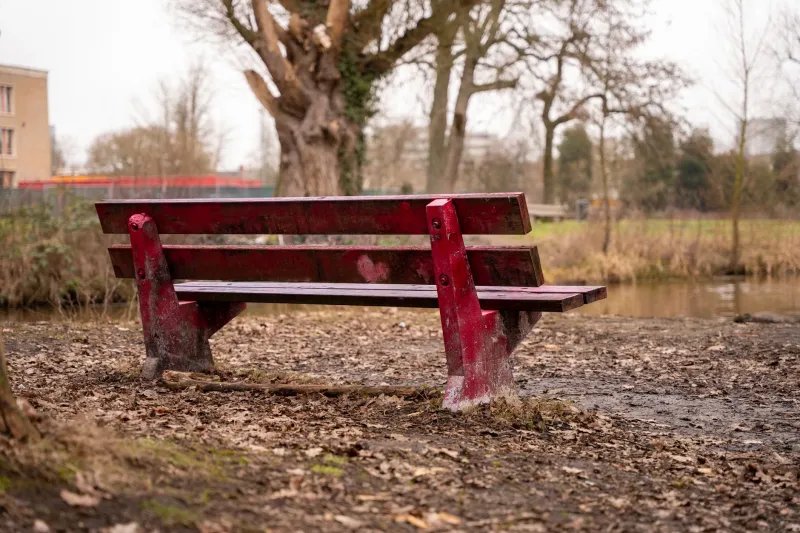
The best modern dead drop spots share a few qualities: high foot traffic (so a visit doesn't look suspicious), easy access without requiring special equipment, and some form of natural concealment. Popular choices in American cities include the undersides of park benches with magnetic pouches, inside public library book return slots (timed around off-hours), loose bricks in older urban architecture, and the backs of community bulletin boards.
Suburban and rural practitioners tend to favor natural features — hollow stumps, rock cairns with false bottoms, and drainage pipes near trails. The key is that the location must be plausibly deniable. If you're caught near it, you need a mundane reason to be there.
Timing Strategies
Classic CIA protocol called for signal sites — a separate location where one party would leave a visual marker (a chalk mark, a piece of tape, a thumbtack) to indicate a drop had been made. Modern practitioners have adapted this. Some use innocuous public social media posts with embedded timing signals — a photo posted at a specific hour, or a comment using a pre-agreed phrase. The signal and the drop are entirely disconnected.
Retrieval windows are kept short. Anything sitting longer than 48 hours is considered compromised and abandoned.
Verification and Authentication
This is where it gets interesting. How do you know the note you're picking up is from who you think it's from, and not law enforcement or a hostile party? Cold War tradecraft used one-time pads and pre-shared code phrases. Modern practitioners are using variations: specific paper types, wax seals with unique stamps, or handwritten phrases that only the intended recipient would recognize.
Some communities have developed rotating authentication systems where the verification method itself changes on a schedule both parties have memorized.
The Culture Around It
There's a romanticization happening here that's worth acknowledging. Part of the appeal is aesthetic — the tactile reality of physical communication feels meaningful in a way that a disappearing message doesn't. There are communities online (yes, online — the irony isn't lost on anyone) that treat dead drop tradecraft as a kind of craft hobby, sharing location scouting tips the way others share fishing spots.
But underneath the romanticism is a genuine functional logic. In an era where digital communications are increasingly monitored, archived, and legally accessible, going analog isn't nostalgia. It's a rational response to a real threat environment.
The CIA figured that out in 1962. Gen Z is just catching up.
What This Means for the Underground
For communities operating at the edges — whether that's privacy activists, journalists protecting sources, or the kind of folks who frequent places like HydraVault — the dead drop renaissance represents something bigger than a cool spy trick. It's a signal that trust in digital infrastructure has eroded far enough that people are willing to do the harder, slower, more physical work of communicating without it.
That's a significant shift. And if the momentum keeps building, the hollow tree in Philadelphia is going to have a lot of company.