Ghost Data: The Real Way to Disappear Everything You've Ever Touched Online
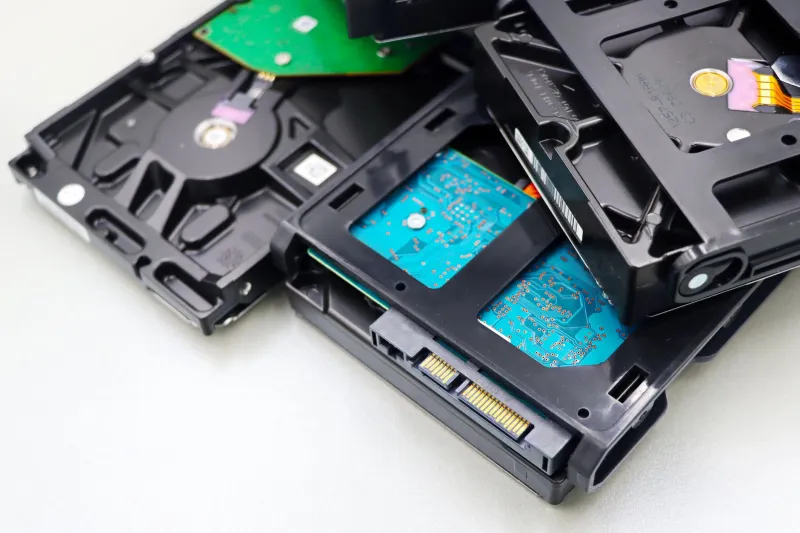
Here's a cold truth: when you hit 'delete,' you're not deleting anything. You're updating a pointer. The data sits right where it always was, patiently waiting for someone with the right tools and enough motivation to find it. In 2024, with cloud backups, ISP logging, device telemetry, and data brokers vacuuming up everything you've ever clicked, 'clearing your history' is basically a polite gesture with no practical effect.
If you're serious — and by serious, we mean genuinely serious — about eliminating your digital footprint, you need a different framework. Not tips. A framework. One that accounts for every layer where your information lives, because there are more layers than most people realize.
Why 'Delete' Is a Lie Your OS Tells You
Let's start at the device level, because that's where most people stop.
When a file is deleted on a traditional hard drive, the operating system marks that sector of the disk as available for reuse. The actual data remains intact until something else overwrites it. On an SSD, it's more complicated — wear-leveling algorithms mean data can persist in cells the OS thinks are empty. This is why forensic recovery tools can pull files from 'wiped' drives with alarming regularity.
The fix for spinning hard drives is multi-pass overwriting. The Gutmann method (35 passes of random data) is the gold standard, though most security professionals consider 7 passes more than sufficient for practical purposes. Tools like DBAN (Darik's Boot and Nuke) handle this for full drives.
For SSDs, overwriting is less reliable. The actual answer is physical destruction. We'll get to that.
The Cloud Problem Nobody Wants to Talk About
Here's where people get comfortable too fast. You wiped your laptop. Great. But when did you last audit what's sitting in iCloud, Google Drive, Dropbox, or whatever other service auto-synced your files at some point in the last five years?
Cloud providers retain deleted data for varying periods — often 30 to 90 days after deletion, sometimes longer. Some services retain metadata (file names, timestamps, sharing history) even after the files themselves are gone. And if you've ever connected a third-party app to any of these services, that app may have its own copy of your data sitting on servers you've never thought about.
The only real answer is a systematic account audit. Go through every service you've ever used, revoke third-party app permissions first, then delete the data, then delete the account. Do it in that order. Deleting the account without revoking permissions first sometimes leaves orphaned data with connected apps intact.
Services like JustDeleteMe maintain directories of how difficult various platforms make account deletion. Use them.
Metadata Is the Thing That Kills You
Content is what most people focus on. Metadata is what actually hangs people.
A photo taken on your phone contains EXIF data: the exact GPS coordinates where it was shot, the device model, the timestamp, sometimes even the lens aperture. A Word document contains revision history, author names, and editing timestamps baked into the file itself. An email header contains routing information that can identify your approximate location even if you're using a VPN.
Stripping metadata before sharing anything sensitive isn't optional — it's baseline. ExifTool handles most file types. For documents, printing to PDF through a clean environment and then processing through a metadata scrubber removes most traces. For images, tools like MAT2 (Metadata Anonymisation Toolkit) are purpose-built for this.
But even stripped files leave traces at the transmission layer. Which brings us to the network.
Your ISP Knows More Than Your Therapist
Even with a VPN active, your ISP can see that you're connected to a VPN, how much data you're moving, and timing patterns that can be correlated with other data sources. This is called traffic analysis, and it's a legitimate forensic technique.
Tor adds multiple layers of routing and encryption that make traffic analysis significantly harder — but Tor has its own weaknesses, particularly at entry and exit nodes. The combination of Tor over a VPN (connecting to VPN first, then Tor) reduces exposure at both ends.
For cryptocurrency transactions — which many people treat as inherently private — the blockchain is a permanent, public ledger. Bitcoin transactions are pseudonymous, not anonymous. Chain analysis firms like Chainalysis have built entire businesses around de-anonymizing transaction histories. Privacy coins like Monero use ring signatures and stealth addresses to obscure transaction graphs by default. CoinJoin mixing for Bitcoin adds a layer of obfuscation, but it's not equivalent.
If you're moving value and care about traceability, the coin choice matters more than most people admit.
Physical Destruction: When Software Isn't Enough
There are situations where software-level solutions aren't sufficient. Devices seized before wiping can be imaged before you get a chance to run anything. Hardware with embedded storage (think: smart TVs, old routers, IoT devices) often can't be reliably wiped through software at all.
For hard drives: degaussing (exposing the drive to a powerful magnetic field) renders data unrecoverable and the drive non-functional. Industrial degaussers are the tool of choice for government agencies. For most people, drilling through the platters in multiple locations and then shredding achieves similar results practically.
For SSDs and flash storage: shredding is the answer. Not metaphorically — actual physical shredding. Commercial e-waste facilities with NSA-approved media destroyers reduce chips to particles too small to reconstruct.
For phones: factory reset is not enough. Remove the SIM, factory reset, then physically destroy the storage chip if the device is being disposed of in a sensitive context.
The Stuff You Forgot About
Final layer, and the one that catches people off guard: the data you didn't create intentionally.
Data brokers — companies like Spokeo, Whitepages, BeenVerified, and dozens of others — aggregate public records, purchase histories, and scraped social data into profiles they sell to anyone who pays. These profiles exist whether you've ever signed up for anything or not. Services like DeleteMe or Privacy Bee automate opt-out requests across hundreds of brokers, but the process is ongoing — brokers re-aggregate data continuously.
Search engine caches, Wayback Machine snapshots, and forum archives preserve content long after the original source is gone. Google's removal request tool handles some of this for search results. The Wayback Machine has an exclusion process. Neither is comprehensive.
The honest answer is that true erasure is asymptotic — you can get closer and closer to zero, but the starting point matters enormously. The best time to minimize your footprint was before you made it. The second best time is right now, starting with the layers closest to you and working outward.
Ghost mode isn't a setting you flip. It's a practice you maintain.