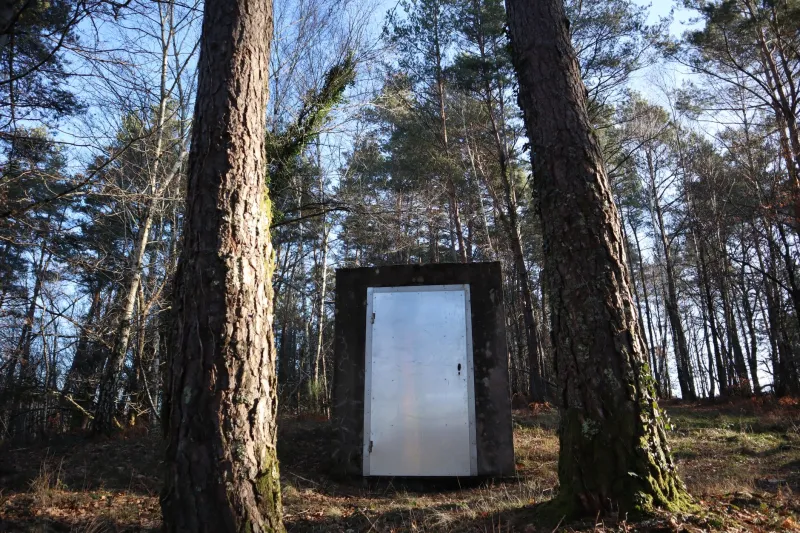
Stone Cold and Signal-Free: Why the Underground Is Going Back to Physical Drops

There's a hollow bolt embedded in a park bench somewhere in a mid-sized American city. Inside it: a folded note, a USB drive, or maybe just a key. No message was sent to arrange it. No app pinged. No server logged the transaction. Two people — who may have never spoken online — just completed an exchange that left absolutely zero digital fingerprints.
Welcome to the dead drop renaissance.
For a lot of folks raised on Signal, Tor, and end-to-end encryption, the idea of going analog sounds almost laughably retro. But here's the thing: digital tools, no matter how hardened, still require infrastructure. Servers. ISPs. Power grids. Metadata. And somewhere along the line, that infrastructure answers to someone. Physical dead drops answer to nobody.
Spies Did It First (And They Were Right)
The dead drop isn't new. Intelligence agencies have been using them since at least the early 20th century, and the Cold War turned them into an art form. The basic concept is almost embarrassingly simple: Party A leaves something at a pre-agreed location. Party B retrieves it later. The two parties never meet, never communicate in real time, and ideally never appear in the same place simultaneously.
The CIA and KGB both relied heavily on dead drops to run their most sensitive human assets. Robert Hanssen — the FBI agent who spent 22 years leaking secrets to Moscow — famously communicated almost exclusively through physical dead drops. He never met his handlers face to face. For over two decades, that kept him off the radar. It wasn't fancy. It was deliberate.
The psychological genius of the dead drop is that it severs the communication chain entirely. You can't intercept a conversation that never happened. You can't subpoena a server that was never involved.
Why 2024 Made People Pay Attention Again
The last few years have been rough on digital privacy absolutists. Encrypted platforms have been compelled to hand over metadata. VPN providers that promised no-logs policies turned out to have logs. App-based marketplaces — even those operating in the darker corners of the web — have been taken down in coordinated federal operations that traced back to hosting vulnerabilities, payment trails, or just one sloppy user who forgot to route through Tor on a Tuesday.
The pattern is consistent: the more sophisticated the digital infrastructure, the more attack surfaces it creates. Every node in a network is a potential point of failure. And law enforcement has gotten genuinely good at exploiting those failure points.
Physical dead drops have none of those vulnerabilities — because they have no infrastructure at all.
That realization has sent certain communities back to the drawing board. Not abandoning digital tools entirely, but layering analog methods on top of them as a kind of last-mile solution. The coordination might happen encrypted online. The actual exchange? That happens in a park, a library, a bus station locker, or a magnetic key box stuck under a dumpster in a parking garage.
How Modern Practitioners Are Adapting the Tradecraft
Classic spy tradecraft has been adapted with some distinctly 21st-century twists. A few approaches that have surfaced in various underground communities:
The Geocaching Camouflage Geocaching — the outdoor hobby where participants use GPS coordinates to find hidden containers — has accidentally created perfect cover for dead drops. Hiding a container in a public space is normalized behavior. Nobody questions a person crouching near a trail marker or checking under a park bench. The hobby's own community has developed genuinely sophisticated concealment hardware: magnetic containers, fake rocks, hollow logs. All of it commercially available and entirely innocuous to anyone who doesn't know what they're looking for.
USB Dead Drops A subculture literally called "USB Dead Drops" already exists in the art world — people embed USB drives into walls, curbs, and public structures for anyone to plug into. That infrastructure has obvious dual-use potential. A drive embedded in a specific brick in a specific alley is retrievable by anyone who knows where to look, and completely invisible to everyone else.
The Locker Circuit Airport lockers, bus station storage, gym lockers with combination locks — these have been used for handoffs since before the internet existed. Modern practitioners rotate locations and use one-time combinations communicated through steganography or pre-arranged code rather than any traceable message.
Signal Rocks and Chalk Marks The old spy trick of leaving a chalk mark, a thumbtack, or a piece of tape in a specific location to signal "drop is loaded" or "abort" has been modernized with QR-code stickers that look like ordinary advertising. Scan it with a camera — not a QR app — and you get coordinates. Or nothing, if you're not the intended recipient.
The Psychological Pull of Going Physical
There's something else going on here beyond pure operational security. For a lot of people operating in underground spaces, the return to physical methods carries a kind of psychological weight that digital tools simply can't replicate.
Digital anonymity always feels conditional. You're trusting code you didn't write, running on hardware you didn't build, through networks you don't control. There's an ever-present background anxiety: what if there's a backdoor I don't know about? What if the developer got a national security letter?
A hollow bolt in a park bench has no backdoors. A key under a rock runs no firmware updates. The physicality of it is, paradoxically, reassuring. You can see the thing. You can verify it with your own hands. In a world where digital trust has been eroded by breach after breach, that tangibility matters.
There's also the element of craft. Dead drops, done properly, require observation, patience, counter-surveillance awareness, and a certain kind of methodical thinking that most digital tools have engineered away. For communities that pride themselves on operational discipline, that's not a burden — it's a feature.
The Limits Nobody Should Ignore
None of this is a magic solution, and anyone treating it like one is going to get burned. Physical dead drops introduce their own risks: surveillance cameras have proliferated massively in American cities, license plate readers are everywhere, and cell phones — even powered off — can be tracked to within a few hundred feet through tower ping data if anyone's already watching you.
The discipline required is significant. If you drove to the drop site, your car was logged. If you carried your phone, your location history has a gap that looks suspicious. Physical tradecraft only works when the entire operational chain is clean — not just the moment of exchange.
The communities that are doing this well understand that dead drops aren't a replacement for digital security. They're the final layer of a much deeper stack. The communication to arrange the drop is encrypted and ephemeral. The parties involved have established trust through other means. The physical act itself is just the last mile — the part that leaves no log file.
Going Analog in a Surveillance Economy
At HydraVault, we've watched the privacy conversation evolve from "use a VPN" to "run your own node" to, apparently, "hide a USB drive in a park." The arc is interesting. Every time digital surveillance catches up to digital counter-measures, the response isn't always to build better digital tools. Sometimes it's to step outside the digital world entirely.
The dead drop renaissance isn't nostalgia. It's a rational response to an environment where every byte you send is potentially evidence. Sometimes the most sophisticated move is the one that generates no data at all.
The underground has always understood that. The spies figured it out decades ago. In 2024, everyone else is just catching up.