Analog Ghost Protocol: Why Americans Are Hiding Messages in Plain Sight Again
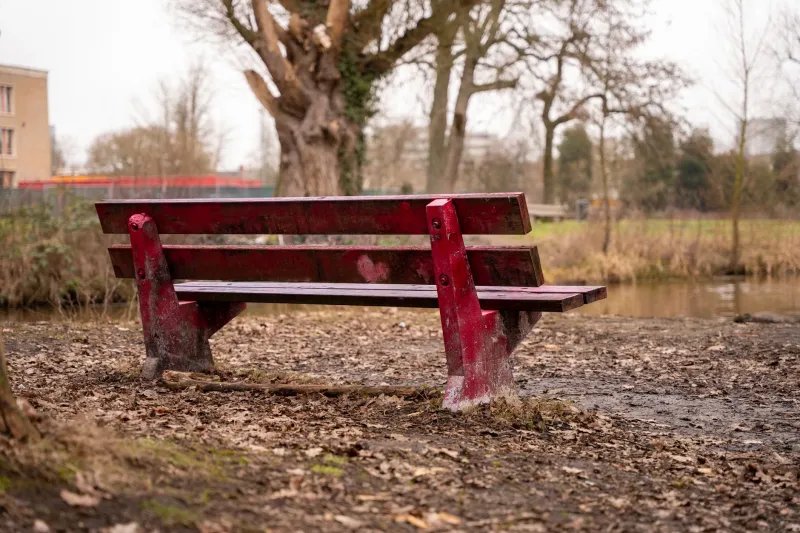
There's a bolt on a park bench in a mid-sized Ohio city. It looks like every other bolt on every other bench — weathered, unremarkable, the kind of thing your eyes skip right over. But unscrew the cap and you'll find a tightly rolled piece of paper inside, left by someone who didn't want to send a text, didn't want to use Signal, and definitely didn't want their metadata bouncing off a server farm in Virginia. Welcome to the dead drop renaissance.
It sounds like something out of a Cold War thriller. And honestly? That's kind of the point.
The Old Playbook Gets a New Cover
Dead drops — the practice of leaving physical objects or messages in pre-agreed locations for another party to retrieve — have been a cornerstone of covert communication since at least World War II. Allied operatives used them to pass intelligence without ever meeting face to face. Soviet spies used them to avoid the surveillance apparatus of Cold War America. The beauty of the system was always its simplicity: no signal, no transmission, no digital fingerprint.
Fast forward to 2024, and a surprising range of Americans are dusting off the same concept. Privacy advocates frustrated with surveillance capitalism. Activists in states where organizing has become legally risky. Preppers building communication resilience for grid-down scenarios. Even journalists protecting sources in an era when metadata can be as damning as content.
The common thread isn't paranoia — it's practicality. Every encrypted app runs on infrastructure someone else controls. Every "anonymous" platform still logs IP addresses, device fingerprints, and behavioral patterns. A waterproof capsule buried under a specific rock on a hiking trail? That logs exactly nothing.
Modern Variations on a Classic Technique
The contemporary American dead drop scene has evolved well beyond the hollow tree trunk. Here's what's actually being used out there.
The Magnetic Cache. Strong rare-earth magnets attached to small weatherproof containers — think modified Altoid tins with rubber gaskets — get slapped onto the undersides of metal infrastructure. Dumpsters, utility boxes, bridge supports. Easy to place, easy to retrieve, nearly invisible to anyone not looking for them.
The Urban Geocache Variant. The geocaching community, which has been hiding physical containers in public spaces for over two decades, inadvertently created perfect cover for this kind of activity. A small container that looks like a geocache is a geocache — until it isn't. The community's own norms around not disturbing finds you don't recognize provide a layer of social camouflage that's genuinely hard to replicate digitally.
Dead USB Drops. These have been around since artist Aram Bartholl embedded USB drives in New York City walls back in 2010, but the concept has migrated into privacy circles in a serious way. A USB drive cemented into a wall or hidden inside a public space can transfer files without any network connection ever being made. No WiFi, no Bluetooth, no transmission to intercept.
Paper in Plain Sight. Sometimes the lowest-tech option is the most resilient. Messages written in mundane-looking code — a shopping list where the third item on every line spells something, or a crossword puzzle with answers that mean nothing until you have the key — can be left in library books, inside free newspaper boxes, or tucked into community bulletin boards.
The Psychology of Going Analog
So why would someone in 2024 — someone with access to Tor, to hardware wallets, to end-to-end encrypted everything — choose to hide a note in a fake rock?
Talk to people in these communities and a few themes come up over and over. The first is what some call "attack surface reduction." Every piece of technology you introduce into a communication chain is a potential vulnerability. A piece of paper has no attack surface. It can't be remotely accessed, can't be compelled to produce logs, can't be secretly updated to include a backdoor.
The second theme is what you might call epistemic confidence. With digital tools, you're always trusting someone else's claim that the encryption works, that the servers aren't logging, that the developers haven't received a National Security Letter they're legally prohibited from telling you about. With a physical dead drop, you can verify the security properties yourself. You buried it. You know who has the location. The threat model is human-scale and comprehensible.
The third is something more cultural. There's a growing sense in certain communities that the entire architecture of the modern internet — the platforms, the ad networks, the data brokers — is fundamentally adversarial to users. Opting out of that architecture entirely, even partially, feels like a meaningful act of refusal. It's not just operational security. It's a statement.
Real-World Adaptations for Real-World Concerns
In practice, these techniques are being adapted to some very specific contemporary concerns.
Reproductive rights networks in states with restrictive laws have reportedly used physical information drops to share resources without creating digital trails that could be subpoenaed. Community organizers in cities with aggressive surveillance infrastructure use physical message exchanges for sensitive coordination. Whistleblowers and journalists have long understood the value of physical handoffs — the practice of leaving documents in physical locations rather than transmitting them digitally is well-documented in investigative journalism circles.
Preppers represent a significant portion of the community, and their interest is slightly different. For them, the dead drop isn't primarily about avoiding surveillance — it's about building communication systems that work when the digital infrastructure fails. A network of trusted neighbors with pre-agreed physical cache locations is a communication system that survives power outages, network disruptions, and the kind of infrastructure failures that, frankly, are looking more plausible every year.
The Limits of the Analog Renaissance
None of this is a perfect solution, and serious practitioners know it. Physical drops have their own vulnerabilities — surveillance cameras are everywhere in American cities, and a cache that gets found by the wrong person is a significant operational security failure. The technique requires in-person coordination to set up, which has its own risks. And the throughput is obviously limited compared to digital communication.
But the people reviving these methods aren't claiming they've found a perfect alternative to digital communication. They're arguing for layered security — analog tools for the most sensitive communications, digital tools for everything else, and a clear-eyed understanding of the tradeoffs involved in each.
In a world where every app wants your location, every platform wants your behavioral data, and every ISP is potentially a surveillance partner, a hollow bolt in a park bench starts to look less like paranoia and more like common sense.
The underground has always known: sometimes the oldest tricks are the hardest ones to crack.