Off the Wire: The Communities Building Their Own Internet From Scratch
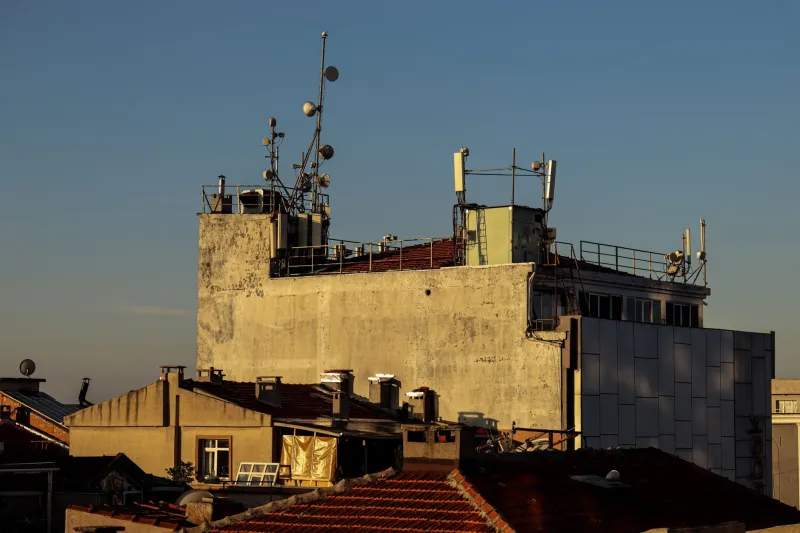
Somewhere in a mid-sized American city, a cluster of antennas on apartment rooftops are passing encrypted traffic between people who've never signed a terms of service agreement. No Comcast. No AT&T. No Verizon. No account. No IP address tied to a billing address. Just radio waves moving data between nodes that a community built, owns, and operates entirely outside the traditional internet infrastructure stack.
This is the parallel economy of connectivity — and it's further along than the tech press is letting on.
The Problem With Renting Your Infrastructure
Every time you connect to the internet through a conventional ISP, you're renting access to infrastructure that someone else controls, monitors, and can modify or terminate at will. Your ISP can throttle your traffic, hand your usage records to law enforcement without telling you, and in some states, sell your browsing history to data brokers. The 2017 rollback of FCC broadband privacy rules made that last part federally legal.
For most people, this is an acceptable tradeoff. For a growing number of communities — privacy advocates, underground commerce operators, political dissidents, rural areas with no viable ISP options, and people who've simply decided they don't want a corporation between them and their communications — it isn't.
The response has been to build alternatives. Not theoretically. Actually.
Mesh Networks: The Architecture of Resilience
The foundational technology behind most of these parallel networks is mesh networking. Unlike conventional internet architecture, where traffic flows from your device to your ISP's infrastructure and out to the broader internet, a mesh network routes traffic directly between nodes — each device in the network acts as both a client and a relay.
This means the network has no single point of failure and no central chokepoint where traffic can be monitored or blocked. Take out one node and traffic reroutes around it automatically. There's no ISP backbone to subpoena.
Projects like NYC Mesh have been running since 2014, currently serving hundreds of access points across New York City's five boroughs. It's not underground in a criminal sense — it's a community-run ISP alternative — but the architecture is identical to what more privacy-focused operators are deploying. The difference is governance and intent.
In Los Angeles, Detroit, and parts of rural Appalachia, similar mesh deployments are operating at various scales. Some are explicitly tied to community organizations. Others are quieter about their membership and purpose.
The Hardware Layer: What These Networks Actually Run On
You don't need exotic equipment to build a mesh node. The most common hardware in American community mesh deployments is repurposed commercial WiFi gear running open-source firmware — specifically OpenWRT, which strips out manufacturer telemetry and gives operators full control over routing behavior.
For longer-range links between nodes, operators use directional antennas running protocols like 802.11ac or newer 802.11ax hardware, capable of bridging distances of several miles with line-of-sight. In dense urban environments, rooftop-to-rooftop links chain together to create coverage areas measured in square miles.
More sophisticated deployments are incorporating LoRa (Long Range) radio technology, which trades bandwidth for extraordinary range — LoRa nodes can communicate across 10 to 15 miles in open terrain on minimal power, making them attractive for rural networks and for applications where low data rate is acceptable (think: text messages and small file transfers rather than streaming).
The Meshtastic project, an open-source LoRa mesh platform originally designed for hiking and outdoor communication, has been quietly adopted by communities who appreciate that it requires no internet connection, no cell service, and no central server to function.
Economic Models: How the Shadow Infrastructure Pays for Itself
Here's where it gets interesting from an underground commerce perspective. A communications network that operates outside conventional ISP infrastructure needs an economic model that also operates outside conventional financial rails.
Some community mesh networks operate on pure volunteer labor and donated hardware — the NYC Mesh model. But networks serving more sensitive communities have developed their own economic layers.
Cryptocurrency — particularly privacy coins — has become the natural settlement layer for these networks. Operators who provide bandwidth and hardware maintenance receive compensation in Monero or similar assets through channels that don't touch the traditional banking system. Users purchase access tokens in the same way. The entire economic loop closes without a single bank account or credit card in the chain.
Some networks have developed their own internal token systems, functioning as closed-loop economies where value circulates entirely within the network's membership. It's a direct descendant of the cypherpunk economic vision that animated early Bitcoin development — and it's operational, not theoretical.
Geographic Strongholds and Why They Matter
Certain geographies have proven more hospitable to parallel network development than others.
Dense urban areas with high buildings provide natural infrastructure for rooftop antenna networks. Cities with active tech communities — the Pacific Northwest, the Northeast corridor, parts of the Mountain West — have the human capital to build and maintain complex systems.
Rural areas provide a different advantage: low population density means less regulatory attention and more physical space to run long-range links. Communities in rural Montana, the Ozarks, and parts of the Southwest have built networks that cover enormous geographic areas with surprisingly few nodes.
The Appalachian corridor deserves particular mention. A combination of poor commercial ISP coverage (which creates genuine demand for alternatives), strong community self-reliance culture, and rugged terrain that naturally screens radio traffic has made it a surprisingly active zone for alternative network development.
The Bigger Picture
What's being built here isn't just an alternative to Comcast. It's an alternative infrastructure stack — communications, commerce, and community organization — that operates on fundamentally different assumptions about who owns the pipes and who controls access to them.
The cypherpunks who laid the ideological groundwork for Bitcoin in the 1990s imagined exactly this: a world where cryptography and decentralized infrastructure made it possible for communities to opt out of systems they didn't trust. The crypto part arrived first and got most of the attention. The infrastructure layer is arriving now, quietly, on rooftops and in server rooms that your ISP has never touched.
HydraVault has been watching this space for a while. The parallel economy isn't coming. In a lot of places, it's already running.